

About
An Accessory Dwelling Unit (ADU) is a small, independent living space built on the same lot as a main home. Examples of ADUs include small, detached cottages, garage apartments, townhome basement units, and in-law suites.

Overview
Council Bill (CB) 3-2026, created to expand opportunities for the construction of accessory dwelling units, was signed into law on February 6, 2026, and will be effective beginning April 8, 2026. CB3-2026 aligns Howard County Government’s zoning regulations with the broader goals of the County’s HoCo By Design General Plan and Housing Opportunities Master Plan, as well as the State’s recently adopted ADU law (House Bill (HB) 1466). CB 3-2026 allows single family homeowners to either construct attached and detached ADUs or renovate existing space to accommodate an attached ADU, in various residential zoning districts. Examples of ADUs include small, detached cottages, garage apartments, townhome basement units, and in-law suites.
What's New!
- Council Bill (CB) 3-2026 is effective as of April 8, 2026.
- Learn where ADUs have the potential to be established below.
- Apply for an Accessory Dwelling Unit.
- Review the list of Amendments included in CB3-2026 below under "Legislation"
Webinar: January 12, 2026
View the Accessory Dwelling Unit (ZRA-218) webinar from the Department of Planning and Zoning webinar that was hosted on January 12, 2026.
Review the Accessory Dwelling (ZRA-218) presentation from the Department of Planning and Zoning webinar hosted April 7, 2026.
Review Questions and Answers from the Accessory Dwelling Unit (ZRA-218) webinar on January 12, 2026 hosted by the Department of Planning and Zoning.
Legislation
Examine resources related to Maryland HB 1466 requiring local government to adopt a local law authorizing the development of accessory dwelling units to meet the housing needs of Maryland residents including legislation, frequently asked questions, task force reporting, and focus groups.
Explore the essential details of Accessory Dwelling Units in Howard County, including what's changing, how they work, and what they mean for our community.
Below are highlights of several amendments made to the original petition.
-
ADU's shall not be used as short-term rentals
-
ADU's shall not be permitted on lots with two-family dwellings
-
Maximum lot coverage standards are outlined for all detached accessory structures (including ADU's)
-
Add a lot coverage maximum for ADUs in the planned service area and exempts lot coverage specifically for properties zoned RC and RR
-
Limit of one detached or attached ADU per lot developed with single family detached dwellings
-
Limit of one attached ADU per lot developed with single family attached or semi-attached dwellings
-
Property owner developing an ADU must ensure stormwater runoff will be mitigated and not impact neighbor properties
-
Increase of off-street parking per ADU from one space to three spaces (exceptions allowed)
Where Can ADUs Be Located?
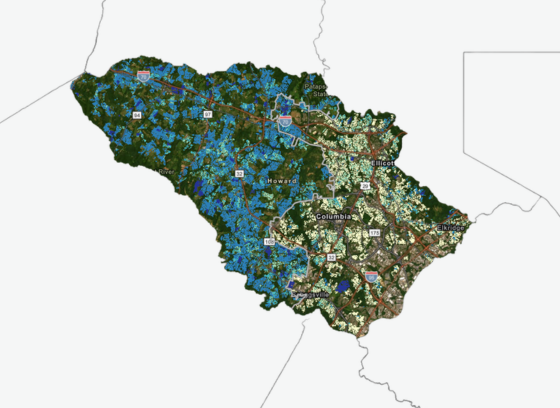
Explore the ADU Interactive Web Map that indicates existing SFD lots in Howard County that may have the potential for an ADU. Properties are categorized by lot area indicating the maximum combined size of all accessory structures allowed as defined in the recently adopted ADU legislation. It is not guaranteed that all properties shown on this map could accommodate an ADU.
An ADU can only operate upon approval of a permit issued by the Department of Planning and Zoning based on compliance with the Zoning Regulations. The ADU application must include a plot plan that shows compliance with the maximum size limitations and required setbacks. For ADUs in a newly constructed structure, the plot plan must also demonstrate adequate water conveyance not impacting neighboring properties or the existing subdivision’s stormwater management facilities.
Frequently Asked Questions
An ADU is a smaller, independent home located on the same property as a single-family detached, attached, semi-detached and two-family dwelling. An ADU provides complete, independent living facilities for at least one person which includes at a minimum: a bathroom, a kitchen, and sleeping area.
The maximum allowable size is calculated from the exterior footprint of the principal dwelling, and the accessory unit must not exceed 75% of that footprint.
Yes. The Property Owner must reside either within the principal dwelling or within the ADU.
Under current zoning code, dwellings can host a max of 8 unrelated or 2 or more related persons occupying the dwelling. If you are renting the ADU, there are specific square footage guidelines that must be adhered to regarding the number of occupants. As such, please contact the Department of Inspections, Licenses and Permits for clarification at 410-313-1830.