
Flu and Respiratory Illness Prevention
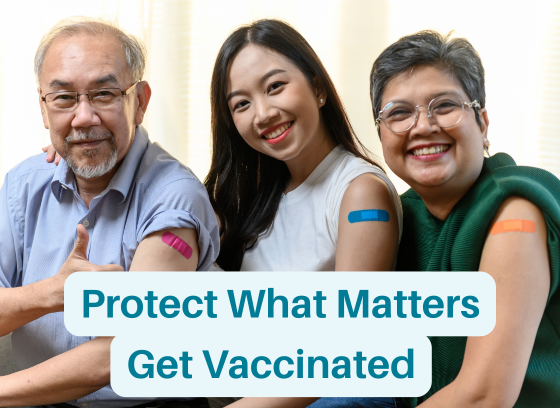
Whether you're looking to get vaccinated, or find out more information, see our resources below for Flu and other respiratory Illnesses. Protect What Matters. Get Vaccinated.
Community Flu Clinics
2026-2027 Flu Vaccine
- The Health Department will offer free flu shots at multiple community events around Howard County starting in October – see schedule below.
- These are walk-up events, no appointment necessary. They will feature a regular-dose trivalent flu vaccine for the 2026-2027 season (recommended for ages 6 months and older) and a limited supply of 2026-2027 season high-dose flu vaccine (recommended for 65 years and older). All products offered are inactivated influenza vaccine.
- There is no charge for flu vaccine at Health Department events, but patients who are enrolled in Medicare will be asked to provide their account number if available. This allows us to recover an administration fee from the Centers for Medicare & Medicaid Services and extend the reach of our community flu efforts.
Date and Time | Event/ Community Partner | Address |
| Wednesday, 10/7/2026 5:30-8:30 p.m. | HCPSS Hispanic Heritage Month Resource Fair at Deep Run Elementary School | 6925 Old Waterloo Rd Elkridge 21075 |
| Saturday, 10/10/26 11 a.m.-2 p.m. | Elkridge Volunteer Fire Department Open House | 5700 Rowanberry Dr Elkridge 21075 |
| Friday, 10/16/2026 12-4 p.m. | Dar Al Taqwa Mosque Community Flu Clinic | 10740 MD-108 Ellicott City 21042 |
| Saturday 10/17/26 10 a.m.-12 p.m. | DCRS Winter Coat Distribution at North Laurel Community Center | 9411 Whiskey Bottom Rd Laurel 20723 |
| Tuesday, 10/20/26 4-7 p.m. | Elkridge Library/ 50+ Center Community Flu Clinic | 6540 Washington Blvd Elkridge 21075 |
| Wednesday, 10/21/26 5-7 p.m. | Laurel Woods Elementary School Pop-up Clinic w/ Roving Radish | 9250 N Laurel Rd Laurel 20723 |
| Saturday, 10/24/26 1-3 p.m. | Howard County Library System - East Columbia Branch | 6600 Cradlerock Way Columbia 21045 |
| Wednesday, 10/28/2026 11 a.m.-3 p.m. | Wilde Lake Interfaith Center Community Flu Clinic | 10431 Twin Rivers Rd Columbia 21044 |
| Monday, 11/9/26 3-6 p.m. | Howard County Library System - Miller Branch | 9421 Frederick Rd Ellicott City 21042 |
| Sunday, 11/15/26 3-4:30 p.m. | Chin Bethel Church Elkridge | 6801 Douglas Legum Dr Elkridge 21075 |
| Tuesday, 11/24/2026 4-6 p.m. | DFRS Thanksgiving Basket Distribution at North Laurel Community Center | 9411 Whiskey Bottom Rd Laurel 20723 |
Flu & Other Respiratory Illness Prevention
To help prevent respiratory illnesses, take the following steps:
- Wash your hands frequently
- Cough/sneeze into your elbow or tissue (and throw away)
- Sanitize frequently used surfaces
- Make sure you are up-to-date with your vaccines
If you feel sick:
- Take an at-home test to help you determine next steps (Test kits can be found at local pharmacies, retailers and grocery stores.)
- Wear a mask and try to distance from others
- If possible, stay home from work or school
- Contact your health care provider with questions about treatment options
- The U.S. Food and Drug Administration recently approved a new flu vaccine (mFLUSIVA) for adults 50 and older that uses mRNA technology to help the immune system recognize influenza virus and protect against infection. The Health Department does not have mFLUSIVA available; please speak with your health care provider if interested or review the vaccine manufacturer's information for consumers here.
The FDA has approved the nasal spray influenza vaccine FluMist for self-administration or caregiver-administration for people 2 through 49 years of age. This is the first flu vaccine that does not need to be administered by a health care professional. Individuals interested in ordering FluMist online for use at home should visit the manufacturer website. You can also speak with your healthcare provider about FluMist as an alternative to a flu shot. Please note: the Howard County Health Department does not have FluMist available.
Information about high dose flu vaccine
The CDC’s Advisory Committee on Immunization Practices (ACIP) recommends that those 65 and older get vaccinated with a high dose or adjuvanted flu vaccine if available. These types of vaccine have been shown to produce stronger immune responses in this age group. (Flu vaccines brands in this group include Fluzone High-Dose, Flublok, and Fluad.) If the high-dose flu vaccine is not available, ACIP still recommends that all people over 6 months old should get any accessible brand of trivalent flu vaccine.
Respiratory Illness Frequently Asked Questions
Flu prevention tips:
- Avoid close contact with sick people.
- While sick, limit contact with others as much as possible to keep from infecting them.
- If you are sick with a flu-like illness, the CDC recommends that you stay home for at least 24 hours after your fever is gone except to get medical care or for other necessities.
- Symptoms should be improved and your fever should be gone for 24 hours without the use of a fever-reducing medicine before returning to work or school.
- Cover your nose and mouth with a tissue when you cough or sneeze. After using a tissue, throw it in the trash and wash your hands. (Or cough or sneeze into the bend in your elbow.)
- Wash your hands often with soap and water. If soap and water are not available, use an alcohol-based hand rub.
- Avoid touching your eyes, nose and mouth. Germs spread this way.
- Clean and disinfect surfaces and objects that may be contaminated with germs like flu.
Learn more on the CDC Flu Page and the Maryland Department of Health Flu Page
Avoid close contact with people who are sick. If you are sick, keep your distance from others to protect them from getting sick.
- If possible, stay home from work, school, and errands when you are sick. You will help prevent others from getting sick.
- People with the flu should stay away from others for at least 24 hours after symptoms begin to improve and their fever is gone without the use of a fever-lowering medicine like acetaminophen (Tylenol, etc).
- Cover your mouth and nose with a tissue or inside of your elbow when you cough or sneeze. Make sure to put used tissues in the trash after one use.
- Wash your hands often with warm water and soap. Alcohol-based hand cleaners also work.
- Avoid touching your eyes, mouth, and nose. Germs spread this way.
- Get plenty of sleep, manage your stress, drink plenty of fluids and eat nutritious food.
Influenza (Flu) and COVID-19 are both contagious respiratory illnesses, but they are caused by different viruses. COVID-19 is caused by infection with a new coronavirus (called SARS-CoV-2) and flu is caused by infection with influenza viruses. Because some of the symptoms of flu and COVID-19 are similar, it may be hard to tell the difference between them based on symptoms alone, and testing may be needed to help confirm a diagnosis. Flu and COVID-19 share many characteristics, but there are some key differences between the two. Learn more about similarities and differences between COVID-19 and Flu.
For more information about COVID-19, visit the COVID Information page.
According to the CDC, individuals do not need to wait between COVID-19 and flu vaccines. It's safe and convenient to get both at the same time. Learn more at the CDC Getting a Flu Vaccine and other Recommended Vaccines at the Same Time webpage
COVID, Flu, RSV, and other Respiratory Illnesses
These strategies can help prevent common respiratory viral illnesses:
- Stay up to date with all recommended immunizations.
- Practice good hygiene, including washing your hands frequently with soap and water, and covering coughs and sneezes.
- Take steps for cleaner air, such as gathering outdoors, opening a window, wearing a mask, or improving indoor air quality through HVAC or a portable air filter.
If you have a respiratory virus:
- Stay home and away from others (including people you live with who are not sick). Children should follow guidance from schools.
- You can go back to your normal activities when both are true:
- Your symptoms are getting better overall, and
- You have not had a fever (and are not using fever-reducing medication) for at least 24 hours.
- When you return to normal activities, take added precaution over the next 5 days, such as practicing good hygiene described above to prevent spread, wearing a well-fitted mask, physical distancing, and/or testing when you will be around others. This is especially important to protect people with higher risk of severe illness from respiratory viruses.
All of the prevention strategies described in this guidance can be helpful to reduce risk. They are especially helpful when:
- Respiratory viruses are causing a lot of illness in your community.
- You or the people around you were recently exposed to a respiratory virus, are sick, or are recovering.
- You or the people around you have risk factors for severe illness.
- Many factors can make it more likely for someone to become very sick from a respiratory virus, including young children, older adults, people with weakened immune systems, women who are pregnant, and people with disabilities.
- Many factors can make it more likely for someone to become very sick from a respiratory virus, including young children, older adults, people with weakened immune systems, women who are pregnant, and people with disabilities.
- You may not be aware of the things that can make others more vulnerable to serious illness. Using the core prevention strategies will provide a degree of protection regardless. If you are unsure about the health condition or risk status of those around you, the most protective option is choosing to use additional prevention strategies, like masking, physical distancing, and testing.
- Respiratory viruses are viruses that cause illnesses in the respiratory system. These illnesses share similar symptoms, risk factors, and prevention strategies.
- In the United States, we have more tools than ever before to help people protect themselves, their families, and communities from severe respiratory illnesses.
Every year, respiratory viruses such as influenza (flu), COVID-19, and respiratory syncytial virus (RSV) cause hundreds of thousands of hospitalizations and thousands of deaths during the fall and winter virus season.
Common respiratory viral illnesses
Symptoms
Respiratory viruses may cause both upper respiratory tract symptoms (the vocal chords and above) and lower respiratory tract symptoms (below the vocal chords). Some viruses also affect the nose, throat and lungs, and can lead to serious lung infections, such as pneumonia.
Examples of respiratory virus symptoms
- Fever
- Chills
- Fatigue (tiredness)
- Cough
- Runny or stuffy nose
- Decrease in appetite
- Sore throat
- Vomiting
- New loss of taste or smell
- Headache, muscle or body aches
- Diarrhea
If you feel sick:
- Take an at-home test to help you determine next steps (Test kits can be found a local pharmacies, retailers and grocery stores.)
- Wear a mask and try to distance from others
- If possible, stay home from work or school
- Contact your health care provider with questions about treatment options
Resources:
In addition to CDC's Respiratory Virus Guidance, there are several special considerations for people with certain risk factors for severe illness.
Risk Factors for Severe Illness from Respiratory Viruses
- Older Adults
- Young Children
- People with Weakened Immune Systems
- People with Disabilities
- Pregnant Women