
About
Nature Based Solutions (NBS) are practices that involve protecting, sustainably managing, and restoring ecosystems. Common NBS practices include include planting trees, creating rain gardens, and establishing pollinator habitats. These conservation-focused practices support climate change mitigation by reducing emissions and sequestering carbon.
In addition to mitigating climate change, NBS practices provide many co-benefits - such as reducing the risk of natural hazards. For example, trees lower surface and air temperatures by providing shade and cooling, which helps to reduce the impacts of extreme heat and effects of urban heat islands.
Nature-Based Climate Solutions
Stormwater Best Management Practices
Stormwater Best Management Practices (BMPs) reduces flood risk, prevents erosion, and improves water quality. The installation and maintenance of small-scale stormwater management practices, nonstructural techniques, and better site planning to mimic natural hydrologic runoff characteristics, preserve natural features, and minimize the impact of land development on water resources. These best practices may include bioretentions, rain gardens, conservation landscapes, and tree canopy expansion.
Tree Plantings
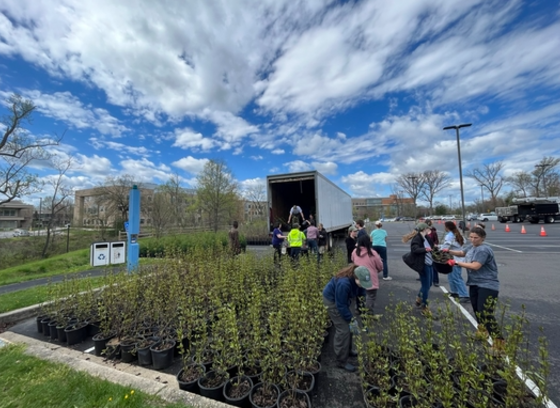
Planting trees is just about the best thing we can do for the environment. Trees reduce erosion, clean the air and water, lock down carbon from the atmosphere, provide habitat and make our community more resilient to climate change. Additionally, tree plantings reduce heat island impacts. Trees help to cool down surface temperatures and provide protection from the sun.
Protecting Pollinator Habitat
Pollinator protection promotes a healthy environment and a sustainable food supply. Planting native plants, eliminating and reducing pesticide use, and creating pollinator habitats supports bees and other pollinators. Our pollinators are vital to our farms and ecosystems.