
About
Learn more about the Green Infrastructure Network, Forest Conservation, Green Neighborhoods and Watershed Planning.
Live Green Howard
Live Green Howard is Howard County’s depot for all things green!
Explore the different tracks of information available and help us make Howard County greener, healthier and a true sustainable community.
Green Infrastructure Network
Eric Buschman | ebuschman@howardcountymd.gov
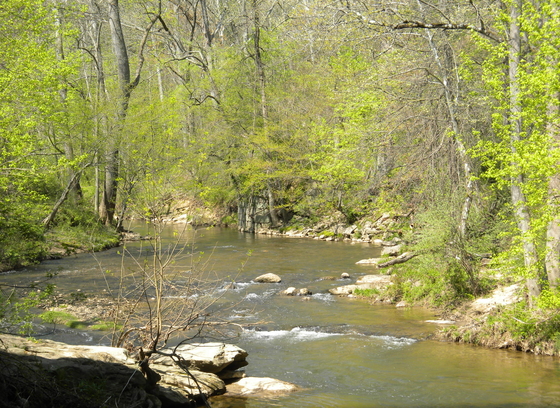
Green Infrastructure is a network of interconnected waterways, wetlands, forest, meadows, and other natural areas. This infrastructure helps support native plant and animal species, maintain natural ecological processes, sustain air and water resources, and contribute to the health and quality of life for communities.
Howard County's Green Infrastructure Network consists of hubs (large, natural areas) and connecting corridors that often follow rivers and streams.
The Department is moving forward with implementation priorities defined in the Green Infrastructure Network Plan, including developing habitat management plans for the hubs and corridors. The habitat management plans include information on existing conditions and recommendations for landowners who would like to maintain or improve the habitat on their property.
Forest Conservation
For more information on the Howard County Forest Conservation Program, visit the Howard County Forest Conservation Program website.
If you have a specific question, contact the Department of Planning and Zoning, Division of Land Development Planner-of-the-Day at (410) 313-2350.
Green Neighborhoods
Eric Buschman | ebuschman@howardcountymd.gov
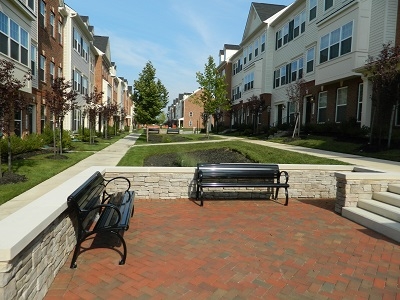
Green Neighborhoods is a voluntary program that uses housing allocations as an incentive to encourage development that conserves and protects natural resources, while providing sustainable communities that are energy and water efficient. The Green Neighborhoods Program consists of a Sites and a Homes component.
Green Neighborhood Guidance Document for Sites
Green Neighborhood Guidance Document Addendum
The following are supplementary documents referenced in the Green Neighborhood Guidance Document for Sites:
Green Neighborhood Checklist
Green Neighborhood Site Compliance Checklist
Project Description Form
Habitat Management Agreement
Native Plant List
Invasive Exotic Plant List
Template A-4 a-d: Innovative Design
Template G-1: Light Pollution Reduction
Template H-1: Environmentally Preferable Site Products
Template H-2: Reduce Heat-Island Effect of Paving
Template H-4: Regionally Provided Materials
There is also a Green Neighborhood Guidance Document for Homes, which is managed by the Department of Inspection, Licenses and Permits:
Green Neighborhood Guidance Document for Homes
For further information, please visit the Green Neighborhoods Web Page of the Department of Inspection, Licenses and Permits.
Please see the below Council Bills and Resolutions related to Forest Conservation.
Watershed Planning
Watershed-based planning provides the framework to coordinate environmental planning in the County. Watershed planning and management includes all of the activities related to preserving, protecting and restoring the streams, wetlands, forests and other natural resources within a watershed. Howard County lies within the watersheds of two major tributaries to the Chesapeake Bay, the Patuxent and Patapsco Rivers. Approximately three-quarters of the County is within the Patuxent River watershed and the remaining quarter is within the Patapsco River watershed. There are nine major watersheds in the County.
Click the link below to explore an interactive map of watersheds in Howard County!
Little Patuxent Watershed Restoration Action Strategy
Lower Patapsco Watershed Restoration Action Strategy
Lower Patapsco Subwatershed Map
For more studies on Watershed Planning, please see the Department of Public Works Bureau of Environmental Services Stormwater Management Web Page.
Howard County works cooperatively with Montgomery County, Prince George’s County, Washington Suburban Sanitary Commission (WSSC), Maryland-National Capital Park and Planning Commission, Howard Soil Conservation District, and Montgomery Soil Conservation District to protect the Patuxent Reservoirs watershed. The Rocky Gorge and Triadelphia Reservoirs are a major regional drinking water supply source. Approximately half of the reservoirs watershed lies within Howard County. Watershed protection activities include: water quality monitoring; implementing agricultural best management practices, stormwater retrofits and stream channel restoration; and public outreach and education.
The Baltimore City Reservoirs (Prettyboy, Loch Raven and Liberty) are a major drinking water supply source for the Baltimore region and the primary source of water for the public water supply system in Howard County. The voluntary Baltimore Reservoir Watershed Management Program is coordinated through the Baltimore Metropolitan Council, and Howard County contributes financially to this effort. More information is available about this watershed management program through BMC at Reservoir Watershed Management Program.